




Construction work is physically demanding and puts a lot of stress on the feet and legs. Workers spend long days on their feet, carry heavy loads, climb ladders, and walk on hard, uneven surfaces, often in heavy work boots or steel-toe boots. Without proper support, that can lead to foot pain, plantar fasciitis, shin splints, and back discomfort that affect both work and quality of life. Custom-made orthotics can help.
This article explains what orthotics are, the foot problems construction workers face, how orthotics help, and what to look for in orthotics for work boots.
What are orthotics?
Orthotics are inserts placed inside your shoes or boots to support and cushion the feet and legs. They're designed to help with a range of biomechanical problems, such as flat feet, overpronation, and uneven pressure. Custom orthotics are made from a 3D model of your own feet, so the support fits your arch and heel.
Why construction work is hard on the feet
A construction workday combines several of the biggest stresses on the feet. You're on your feet for most of the day, often on concrete, gravel, and rough ground. Carrying tools and materials adds to the load on every step. Climbing, kneeling, and crouching put extra strain on the forefoot and ankles. Work boots provide protection, but many come with thin, flat insoles that offer little arch support, and their stiffness can make long days feel even longer.
Common foot problems in construction workers
- Plantar fasciitis and heel pain from long hours on hard ground.
- Foot fatigue from heavy boots and long shifts.
- Arch pain, especially for workers with flat feet or high arches.
- Shin splints from walking and carrying loads on hard surfaces.
- Metatarsalgia from climbing and crouching.
- Knee and lower back pain linked to how the feet support the body.
- Ankle strain from uneven ground.
How orthotics help construction workers
Orthotics distribute your weight more evenly across your feet, which reduces pressure on the heel and ball of the foot and can ease pain. That's especially important when you're carrying heavy loads. They also help absorb shock from hard surfaces, reducing the impact that travels up through your knees and back.
By supporting the arch, orthotics help reduce foot fatigue, so you can stay on your feet longer with less discomfort. Controlling excessive rolling of the foot can improve alignment through the ankles, knees, and hips, which may ease strain on the back. And a well-fitted orthotic helps your foot sit more securely inside your boot, which can improve stability on uneven ground. Over time, better support can reduce the strain that contributes to chronic problems such as plantar fasciitis.
What to look for in work boot orthotics
- Designed for heavy boots: Support built for the volume and stiffness of work boots and steel toes.
- Firm, load-bearing support: To hold up under heavy loads.
- Shock absorption: For hard surfaces.
- Made from your foot shape: Support that matches your arch.
- Durability: Materials that hold up to tough daily use.
Our recommendation for construction workers
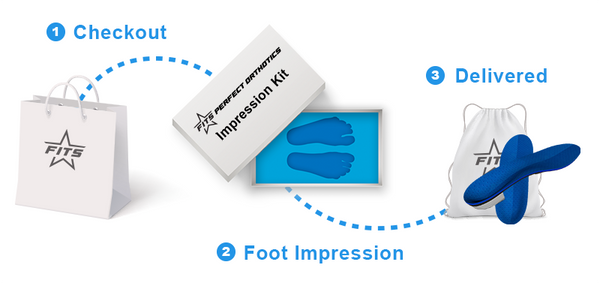
For construction boots and steel toes, we recommend the Fits Perfect Heavy Duty Comfort orthotic. It's designed for heavy boots and steel-toes, supporting your entire body through demanding workdays. To order, scan your feet with your iPhone in the Fits Perfect app, a fast, simple, and accurate 3D scan. If you don't have an iPhone, a mail-in foam impression box is available.
For sneaker-style work shoes, Maximum Comfort is a good option. Browse the full work and comfort range.
Tips for healthy feet on the job site
- Choose well-fitting work boots with room for an orthotic.
- Replace boots when the soles and support wear down.
- Rotate boots if you can, letting each pair dry out.
- Wear moisture-wicking socks to keep feet dry and reduce blisters.
- Stretch your calves and feet before and after work.
- Lift with your legs and keep loads close to your body.
Breaking in orthotics for work boots
Start by wearing your orthotics for a few hours at a time, and build up to full workdays over one to two weeks. Remove the boot's original insole so the orthotic sits flat, and check that your toes have enough room, especially in steel-toe boots.
For more on standing all day, see surviving the 9-to-5 on your feet.
When to see a podiatrist
See a podiatrist or doctor if you have foot pain that doesn't improve with rest, swelling, numbness, or pain after an injury on the job.
Conclusion
Orthotics are a valuable tool for construction workers, providing support, cushioning, and stability for the feet and legs. With orthotics designed for work boots, workers can reduce the strain of the job on their feet and help keep chronic problems like plantar fasciitis at bay.
Frequently asked questions
Can you put orthotics in steel-toe boots?
Yes. Orthotics designed for heavy boots fit in place of the boot's original insole.
What are the best insoles for work boots?
Firm, load-bearing orthotics made from your foot shape, like Heavy Duty Comfort.
Do orthotics help with standing on concrete all day?
Yes. They absorb shock and spread pressure more evenly.
Can orthotics help back pain from construction work?
Better foot support can improve alignment, which may ease lower back strain.


