



Pain along the outside of your ankle, just behind the bony bump, can have several causes. One of the most common, especially in runners and people with high arches, is peroneal tendonitis. It tends to build gradually and can make walking on uneven ground, running, and even standing uncomfortable. The good news is that it usually responds well to rest, rehab exercises, and better support.
This guide explains what peroneal tendonitis is, what causes it, how to treat it, and how foot support can help.
What are the peroneal tendons?
The peroneal muscles run down the outside of your lower leg. Their two tendons pass behind the bony bump on the outside of your ankle, called the lateral malleolus, and attach to bones in the foot. One attaches on the outside of the foot; the other runs underneath the foot to the base of the big toe.
These tendons help turn your foot outward, steady your ankle, and protect it from rolling. They work hard on uneven ground and during side-to-side movements.
What is peroneal tendonitis?
Peroneal tendonitis is irritation and inflammation of one or both peroneal tendons, usually from overuse. The tendons are repeatedly strained faster than they can recover, leading to pain and sometimes swelling.
Symptoms
- Pain along the outside of the ankle, often just behind or below the ankle bone.
- Pain that worsens with activity and eases with rest.
- Swelling along the outside of the ankle.
- Pain when turning the foot outward or rising onto your toes.
- A feeling of instability in the ankle.
- Warmth over the tendon in some cases.
Common causes
- Overuse: Running, especially on sloped or uneven surfaces, and sports with lots of side-to-side movement.
- High arches and supination: Feet that roll outward put more load on the outer foot and the peroneal tendons. See correct your supination.
- Previous ankle sprains: An ankle that's been sprained can be less stable, so the peroneal tendons work harder to protect it.
- A sudden increase in training or a change in surface.
- Worn or unsupportive shoes, especially ones that let the foot roll outward.
- Weak ankle muscles and poor balance.
Treatment and relief
Most cases improve with conservative care:
- Rest: Cut back on running and activities that aggravate the pain. Low-impact options like cycling may be easier.
- Ice: Apply ice to the outside of the ankle for 10 to 15 minutes to ease pain and swelling.
- Supportive footwear: Choose shoes with a stable heel and good support, and replace worn-out shoes.
- Foot support: Orthotics can help manage foot mechanics that overload the tendons.
- Anti-inflammatory medication: May help with pain; check with a pharmacist or doctor first.
- Physical therapy: A therapist can guide rehab and a gradual return to activity.
Rehab exercises
Once the initial pain settles, strengthening and balance work help the tendons recover and reduce the chance of the problem returning. Stop if any exercise causes sharp pain.
- Ankle eversion with a band: Sit with a resistance band around your forefoot, anchored on the inside. Turn your foot outward against the band, then return slowly. Do 2 sets of 10 to 15.
- Calf raises: Rise onto your toes and lower slowly, keeping your weight centered rather than rolling outward. Do 2 sets of 10 to 15.
- Single-leg balance: Stand on the affected leg for 30 seconds. Progress by closing your eyes or standing on a cushion.
- Calf stretch: Lean into a wall with one leg back and the heel down. Hold for 30 seconds.
- Ankle circles: Rotate your foot slowly in both directions to restore mobility.
How foot support helps
If your foot rolls outward or you have high arches, the peroneal tendons may be working overtime. Orthotics can help by:
- Supporting the arch and spreading pressure more evenly across the foot.
- Giving the foot a more stable, balanced base so it's less likely to roll outward.
- Adding cushioning, which is useful for high-arched feet that absorb shock poorly.
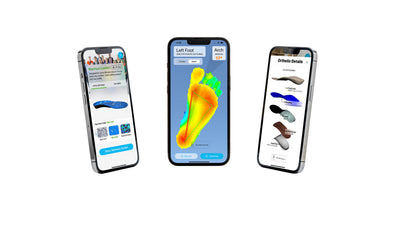
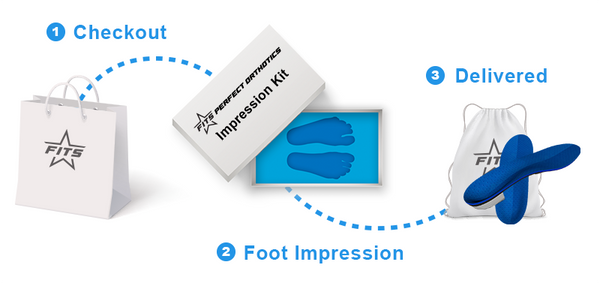
Because custom orthotics are made from the shape of your own feet, they support your arch rather than an average one. Runners may want the Running orthotic, and Maximum Comfort suits everyday shoes. Every style is $249 with free shipping. To order, scan your feet with your iPhone in the Fits Perfect app, or use the mail-in foam impression box if you don't have an iPhone.
For more on supporting high-arched feet, read how to properly support your high arches.
Returning to running
Return gradually once walking and everyday activity are pain-free. Start with short runs on flat, even surfaces, avoid steep camber and trails at first, and build up over several weeks. Keep up your strengthening and balance exercises even after the pain is gone.
When to see a doctor
See a doctor, podiatrist, or physical therapist if pain is severe, came on suddenly after an injury, comes with a snapping or popping feeling behind the ankle bone, or hasn't improved after a few weeks of rest. These can be signs of a tendon tear or a tendon slipping out of place, which need professional care.
Frequently asked questions
What does peroneal tendonitis feel like?
Usually an aching pain along the outside of the ankle, worse with activity and better with rest.
How long does peroneal tendonitis take to heal?
Mild cases often improve over a few weeks with rest and rehab; others take longer.
Can orthotics help peroneal tendonitis?
They can, especially if high arches or supination are adding strain to the tendons.
Should I run with peroneal tendonitis?
It's best to rest from running until the pain settles, then return gradually on flat surfaces.


