



When it comes to foot care, custom-made orthotics are becoming a go-to option for people dealing with foot pain and discomfort. Part of the reason is technology. The way custom orthotics are made has changed a lot, from plaster casts taken in a clinic to accurate 3D scans you can take at home. In this article, we'll look at how custom orthotics have evolved, why 3D scanning matters, and why it points to the future of foot care.
How custom orthotics used to be made
Traditionally, getting custom orthotics meant booking an appointment, often more than one. A practitioner would capture the shape of your feet using a plaster cast or by pressing your feet into a foam box. That impression was then sent to a lab, where the orthotics were built by hand. It worked, but it took time, required travel and time off work, and often involved several separate charges.
The shift to 3D foot scanning
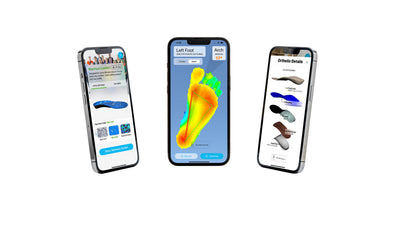
3D scanning has changed the process. Instead of a physical mold, a scanner captures a detailed digital model of your foot's shape, including its length, width, and arch profile. That digital model can then be used to design orthotics that match your foot.
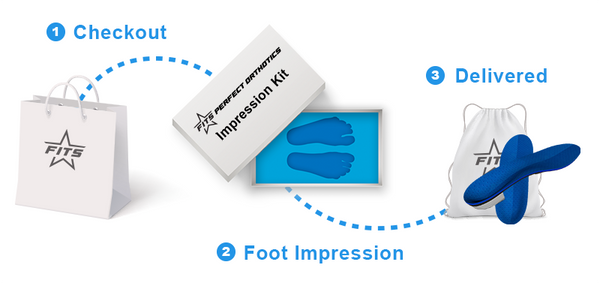
With Fits Perfect, that scan happens on your iPhone. You scan your feet in the Fits Perfect app, a fast, simple, and accurate 3D foot scan, and your orthotics are made from that model. If you don't have an iPhone, a mail-in foam foot impression box is available as an alternative, so everyone can still get a pair built from their own feet.
Why 3D scanning matters
A fit based on your own feet
Unlike over-the-counter inserts that come in standard sizes, custom orthotics made from a 3D scan follow the contours of your own feet. That means the support sits where your foot needs it, rather than where an average foot needs it.
Convenience
Scanning your feet at home removes the need for a casting appointment. There's no travel and no waiting room, and you can do it whenever suits you.
Accessibility
For people who live far from a clinic, have busy schedules, or find appointments difficult, at-home scanning makes custom orthotics much easier to get.
Simpler, more predictable pricing
Removing separate appointments and casting fees makes pricing simpler. Fits Perfect orthotics are $249, ordered online. For a full breakdown, see how much do custom orthotics cost?
What custom orthotics help with
Whatever method is used to capture your feet, custom orthotics are used for many common foot problems:
- Plantar fasciitis and heel pain.
- Flat feet and overpronation.
- High arches.
- Heel spurs.
- Foot fatigue from long hours standing or walking.
They provide support and cushioning for affected areas, which can help ease pain and make moving more comfortable.
Orthotics for sport and work
Custom orthotics are also widely used by athletes and people who work on their feet. Athletes use them for support and alignment during training, and workers use them to reduce pain and fatigue during long shifts. Because different shoes need different shapes, orthotics now come in styles designed for specific uses, from sport and running to work and comfort and slim dress shoe orthotics.
Where traditional care still matters
3D scanning makes custom orthotics easier to get, but it doesn't replace medical care. An at-home scan captures the shape of your feet; it isn't a medical exam. If you have severe pain, an injury, numbness, swelling, diabetes, or a condition that needs diagnosis, see a podiatrist or doctor. For many people looking for everyday support and comfort, though, ordering online is a simple and effective option. Read more in the future of home healthcare.
What's next for foot care
As phone cameras and scanning technology keep improving, more health products are moving toward a model where you capture what's needed at home and the product is made for you. Custom orthotics are a good example: what once required a clinic visit can now start with a few minutes and a phone. That makes support built around your own feet available to many more people.
How to get started
- Choose the orthotic style that matches the shoes you wear most, such as Maximum Comfort for everyday shoes.
- Scan your feet with your iPhone in the Fits Perfect app, or request the mail-in foam impression box.
- Receive your orthotics and break them in gradually over one to two weeks.
Conclusion
Custom-made orthotics are a big part of the future of foot care because they're built around the shape of your own feet, and 3D scanning makes them faster and easier to get than ever. They can ease pain from common foot conditions, support athletes, and help people who stand or walk for work. If you're dealing with foot pain or discomfort, a pair of custom orthotics is worth considering.
Frequently asked questions
How does 3D foot scanning work for orthotics?
A scan captures a digital model of your foot's shape, which is used to make orthotics that match your feet. With Fits Perfect, you scan your feet with your iPhone in the Fits Perfect app.
Is a 3D scan as good as a cast?
Both capture the shape of your feet. A 3D scan is faster and can be done at home.
What if I don't have an iPhone?
Fits Perfect offers a mail-in foam foot impression box as an alternative.
Do I still need to see a podiatrist?
Not to order, but see one if you have severe pain, an injury, or a medical condition.


