



Do you have foot pain or discomfort that seems to spread to other parts of your body, like your knees, hips, or lower back? It could be linked to the way your feet are built or the way they move, such as low arches, high arches, or a foot that rolls inward. Custom-made orthotics are used for a wide range of these problems. Unlike generic insoles, they're tailored to your feet, made from a 3D scan for a precise fit.
Below are the conditions custom orthotics are most commonly used for, grouped by type, along with how orthotics help and when you should see a podiatrist first.
Arch-related conditions
Your arch acts like a spring that absorbs impact and spreads pressure across your foot. When it's higher or lower than average, or collapses as you walk, other parts of the foot and leg pick up the extra load.
High arches
High arches (pes cavus) concentrate pressure on the heel and ball of the foot and absorb shock less effectively. This can lead to muscle strain, heel and forefoot pain, and knee or shin discomfort. Orthotics help by filling in the arch so pressure is spread over a larger area. Learn more in how to properly support your high arches.
Low arches or flat feet
Low arches or flat feet (pes planus) let more of the sole contact the ground. This can cause pain in the arches, ankles, and heels, and can change your gait. Orthotics support the arch and help keep the foot in a more neutral position. See understanding flat feet for more.
Overpronation
Overpronation is when the foot rolls too far inward as you walk or run. It's common in people with flat feet and can strain the arch, ankle, knee, and lower back. Orthotics with firm arch and heel support help control that inward roll.
Foot deformities
Some structural changes in the foot develop over time, often from years of uneven pressure or ill-fitting shoes. Orthotics can't reverse them, but they can reduce pressure and discomfort.
Bunions
A bunion is a bony bump at the base of the big toe, where the big toe angles toward the other toes. Bunions can be painful and may contribute to other toe problems, such as hammer toes. Orthotics can help by improving how weight moves through the foot and reducing pressure on the joint.
Heel spurs
Heel spurs are bony growths on the underside of the heel bone. Pain usually comes from irritation of the surrounding tissue. Orthotics cushion the heel and support the arch to reduce strain on the area.
Hammer toes
Hammer toes bend at the middle joint and can rub against shoes. Orthotics help by improving overall foot alignment and pressure distribution. See exercises and treatments for hammer toe.
Stress- and overuse-related conditions
Repeated stress on the feet, from long hours standing, running, or carrying load, can lead to painful inflammation.
Plantar fasciitis
Plantar fasciitis is inflammation of the plantar fascia, the band of tissue that connects the heel to the toes. It typically causes sharp heel pain, especially with your first steps in the morning. Orthotics support the arch and cushion the heel, reducing tension on the fascia.
Metatarsalgia
Metatarsalgia is pain in the ball of the foot. Orthotics can redistribute pressure away from the painful area. Read do you have metatarsalgia?
Bursitis and tendon problems
Bursitis is inflammation of the small fluid-filled sacs around joints, causing pain and swelling. Tendon problems such as Achilles or posterior tibial tendonitis can also be aggravated by poor foot mechanics. Orthotics can reduce strain on these areas by improving support and alignment.
Recovering from foot or ankle injuries
After an injury, orthotics can provide extra support as you return to normal activity. Always follow your doctor's or physical therapist's guidance during recovery.
How custom orthotics help
- Support the arch so it doesn't collapse or overload.
- Spread pressure evenly across the foot.
- Cushion high-pressure areas like the heel and ball of the foot.
- Improve alignment, which can ease strain on the ankles, knees, and lower back.
Orthotics don't cure these conditions, but they're a useful part of managing symptoms alongside stretching, strengthening, and good footwear.
Do you need a prescription?
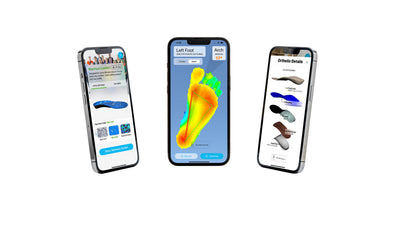
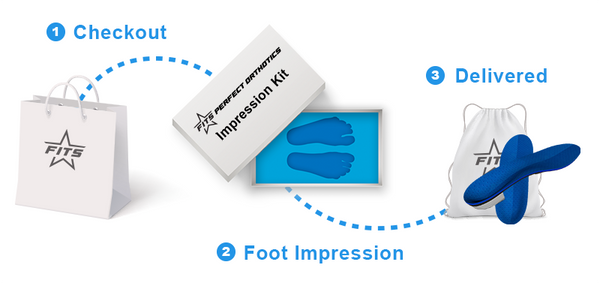
Many people don't realize you don't need a prescription to get custom-made orthotics. With Fits Perfect, you scan your feet with your iPhone in the Fits Perfect app, a fast, simple, and accurate 3D scan, or use a mail-in foam foot impression box if you don't have an iPhone. Browse the full range of custom orthotics, including Maximum Comfort for everyday shoes.
When to see a podiatrist
See a podiatrist or doctor first if you have severe or sudden pain, swelling, numbness, diabetes, or pain after an injury. A professional diagnosis makes sure you're treating the right problem.
Frequently asked questions
What foot problems do orthotics help with?
Common ones include flat feet, high arches, overpronation, plantar fasciitis, heel spurs, bunions, metatarsalgia, and general foot fatigue.
Can orthotics fix bunions?
No. They can reduce pressure and discomfort, but they don't reverse a bunion.
Do I need a prescription for custom orthotics?
Not from Fits Perfect. You can order online using the iPhone foot scan or the mail-in foam impression box.
Can orthotics help knee or back pain?
When the pain is linked to how your feet move, better foot support can help ease strain further up the body.


