



Orthotic insoles are designed to provide support and comfort for the feet and lower limbs. They're commonly used for problems such as plantar fasciitis, flat feet, overpronation, and heel pain. Alongside custom-made orthotics, there's a huge range of pre-made, or prefabricated, insoles available off the shelf. So what's actually the difference between the two, and which one makes sense for you?
This article breaks down how custom-made orthotics and pre-made insoles differ in how they're made, how they fit, how long they last, and what they cost.
What are custom-made orthotics?
Custom-made orthotics are designed to fit one person's feet. They're made from a 3D model of your foot, taking into account your foot's shape, size, and arch profile. Because they follow the contours of your own feet, they can provide targeted support exactly where you need it.
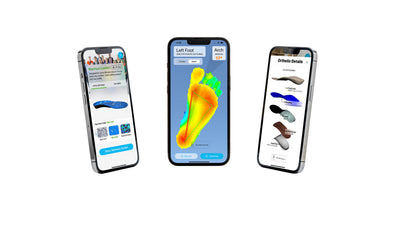
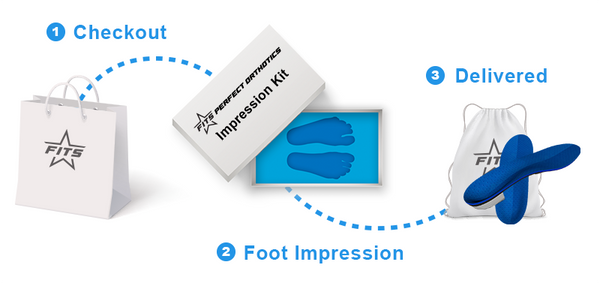
With Fits Perfect, you capture that 3D model yourself by scanning your feet with your iPhone in the Fits Perfect app, a fast, simple, and accurate scan. If you don't have an iPhone, a mail-in foam foot impression box is available instead. To learn about the different styles available, read different types of custom orthotics.
What are pre-made insoles?
Pre-made insoles, also called over-the-counter (OTC) or prefabricated insoles, are mass-produced in standard sizes and shapes. Some offer only cushioning, while others add a generic arch shape. Because they're built for an average foot, they aren't tailored to an individual's needs, and the arch may sit in the wrong place or at the wrong height for your foot.
For some people with mild, occasional discomfort, a basic insert adds a little comfort. For people with specific problems, a generic shape often doesn't address the cause.
Custom-made orthotics vs pre-made insoles: key differences
| Factor | Custom-made orthotics | Pre-made insoles |
|---|---|---|
| Fit | Built from a 3D model of your feet | Standard sizes and shapes |
| Support | Targeted to your arch and foot shape | Generic support or cushioning only |
| Materials | Firmer, more durable materials | Often soft foams or gels |
| Durability | Designed for daily use over a long period | Tend to flatten and wear out sooner |
| Cost | Higher upfront | Lower upfront, replaced more often |
Fit and support
The biggest difference is fit. A custom orthotic matches the length, width, and arch shape of your foot, so the support lines up with how your foot is built. A pre-made insole asks your foot to fit its shape instead.
Materials and durability
Custom-made orthotics are generally made from higher-quality materials than pre-made insoles. They're designed to keep their shape under the daily pressure of your specific foot. Soft over-the-counter insoles often compress and lose support, which means replacing them more frequently.
Cost
Custom-made orthotics cost more upfront than pre-made insoles. Because they last longer and are built for your feet, many people find they're worth the investment. Fits Perfect orthotics are $249, ordered online with no office visit. For a fuller breakdown, see how much do custom orthotics cost?
How to choose between them
A pre-made insole may be enough if you have occasional, mild tiredness in your feet and no specific problem. Custom-made orthotics are usually the better choice if:
- You have ongoing heel, arch, or foot pain.
- You have flat feet, high arches, or overpronation.
- Pre-made insoles haven't helped or wear out quickly.
- You're on your feet all day for work or train regularly.
- Your two feet are noticeably different.
Custom orthotics also come in styles for different shoes, such as Maximum Comfort for everyday sneakers, the Dress Shoe orthotic for slimmer shoes, and sport and running options.
Signs your current insoles aren't working
If you're already using pre-made insoles, watch for these signs that they aren't giving you the support you need:
- Pain comes back within a few hours of putting your shoes on.
- The insole has flattened or the arch has collapsed when you press on it.
- The arch feels like it's in the wrong place, pressing too far forward or back.
- Your shoes still wear unevenly on the inside or outside edge.
- You're replacing them every few months and the cost is adding up.
Any of these suggests a generic shape isn't matching your foot, and support built from a 3D model of your feet may work better.
When to see a podiatrist
If you have severe pain, numbness, swelling, diabetes, or pain after an injury, see a podiatrist or doctor before choosing any insole. They can identify the cause and advise on the right support.
Conclusion
Custom-made orthotics are tailored to your feet, provide targeted support, and are built from durable materials designed to last. Pre-made insoles are cheaper and convenient, but they're one-size-fits-most and may not give the support your feet need. If you're dealing with ongoing discomfort, custom orthotics are usually the more effective long-term option.
Frequently asked questions
Are custom orthotics better than store-bought insoles?
For ongoing foot problems, usually yes, because they're shaped to your feet. For mild, occasional discomfort, a basic insole may be enough.
How long do custom orthotics last compared to insoles?
Custom orthotics are designed to last much longer under daily use. Soft pre-made insoles tend to flatten and need replacing sooner.
Can I use custom orthotics in more than one pair of shoes?
Yes, as long as the shoes are a similar type. Different orthotic styles suit sneakers, dress shoes, and sport shoes.
How do I get custom orthotics without a doctor visit?
With Fits Perfect, you scan your feet with your iPhone in the Fits Perfect app, or use the mail-in foam impression box if you don't have an iPhone.


