




If you have flat feet, the right exercises can help ease symptoms and improve the strength and flexibility of the muscles in your feet and lower legs. Stronger foot muscles give your arch more support, and better flexibility in the calves reduces strain on the bottom of the foot.
Below are ten exercises you can do at home with little or no equipment, along with tips on how often to do them and how they fit with other support like orthotics.
Before you start
- Do the exercises barefoot on a non-slip surface.
- Move slowly and with control. Quality matters more than speed.
- Stop if you feel sharp pain. Mild muscle effort is normal; pain isn't.
- If you have a foot injury or a medical condition, check with a podiatrist or physical therapist first.
10 exercises for flat feet
1. Toe raises
Stand with your feet hip-width apart, holding a wall or chair for balance. Rise up onto your toes, pause, then lower slowly. Do 2 sets of 10 to 15. This strengthens the calf and foot muscles that help support the arch.
2. Calf stretches
Stand facing a wall with your hands on it and one foot behind the other. Keep your back leg straight with the heel down and lean forward until you feel a stretch in the calf. Hold for 30 seconds and repeat on the other leg. Tight calves can increase strain on a flat arch.
3. Towel curls
Sit with your feet flat on the floor and place a small towel under your toes. Use your toes to scrunch the towel toward you, then release. Repeat 10 to 15 times on each foot. This works the small muscles inside the foot.
4. Arch lifts
Stand or sit with your feet flat. Keeping your toes and heel on the floor, roll your weight to the outer edge of your foot so your arch lifts. Hold for a few seconds, then relax. Do 10 to 15 repetitions. This trains the muscles that raise the arch.
5. Ball press
Sit with a tennis ball under your arch. Press down into the ball, hold for a few seconds, then release. You can also roll the ball slowly from heel to toes to loosen the arch.
6. Ankle pumps
Sit with your feet flat on the floor. Lift your heels, keeping your toes down, then lower them. Then lift your toes, keeping your heels down. Repeat 15 times. This improves ankle mobility and works the lower leg muscles.
7. Foot flexes
Sit with your legs straight. Point your toes away from you, then pull them back toward your shins. Repeat 15 times. This stretches and strengthens the muscles at the front and back of the lower leg.
8. Heel walks
Stand up and walk forward on your heels with your toes lifted off the ground for 20 to 30 steps. This strengthens the muscles at the front of the shin.
9. Toe walks
Walk forward on your toes with your heels lifted for 20 to 30 steps. This strengthens the calves and the muscles that support the arch.
10. Single-leg balance
Stand on one foot and try to balance for 30 seconds, keeping your arch lifted rather than letting it collapse. Repeat on the other side. For a challenge, close your eyes or stand on a cushion. Balance work improves foot stability and control.
How often should you do these exercises?
Aim for most days of the week. A routine of five or six of these exercises takes about ten minutes. Results build gradually, so consistency over several weeks matters more than doing a lot at once.
Start with fewer repetitions and add more as the exercises get easier. If an exercise causes pain, skip it and try again later, or ask a professional for an alternative.
Tips for getting the most out of your routine
- Pair strength with stretching. Strengthening and calf stretching work best together.
- Wear supportive shoes during the day so your arches aren't working unsupported for hours.
- Ease into activity. Increase walking or running distance gradually.
- Track how you feel. Note whether pain or fatigue improves over a few weeks.
For more ideas, see best exercises for collapsed arches and flat feet.
Can custom-made orthotics help flat feet?
Exercises build strength over time, while orthotics support your feet throughout the day. Orthotics help with overpronation, a common problem in people with flat feet, by supporting the arch and keeping the foot in a more neutral position. They redistribute pressure across the foot, which can reduce pain and strain on the plantar fascia and heel. Read more in can orthotics help to alleviate pain or correct flat feet?
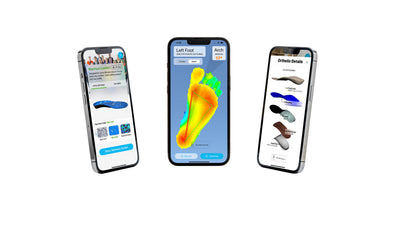
Custom-made orthotics are a good option for flat feet because they're shaped to your own arch. You can order by scanning your feet with your iPhone in the Fits Perfect app, or with a mail-in foam impression box if you don't have an iPhone. Popular choices include Maximum Comfort for everyday shoes and Fitness for gym and training shoes.
When to see a podiatrist
See a podiatrist if your flat feet are painful, stiff, getting worse, or affect only one foot. These can be signs of a tendon or joint problem that needs a proper diagnosis.
Frequently asked questions
Can exercises fix flat feet?
Exercises can strengthen the muscles that support your arch and ease symptoms, but they usually don't fully change foot structure in adults.
How long until exercises help?
Many people notice less fatigue or discomfort after a few weeks of regular exercise.
Should I do flat feet exercises barefoot?
Yes, barefoot on a non-slip surface lets your foot muscles work properly.
Can I combine exercises with orthotics?
Yes. Exercises build strength, while orthotics provide support during daily activities.


