



Running is a great way to stay active and healthy, but it also puts a lot of stress on your feet and legs. Each stride lands with several times your body weight, thousands of times per run. Custom-made orthotics can be a useful tool for runners, providing arch support and cushioning that ease pain and discomfort and support better alignment of the feet, ankles, and legs.
This article explains how orthotics help runners, which running problems they're most useful for, and how to tell if you might benefit from them.
How custom orthotics help runners
Custom orthotics are built from the shape of your own feet, providing support and comfort that off-the-shelf insoles can't match. For runners, they can:
- Support the arch so it doesn't collapse excessively with each landing.
- Control overpronation, the excessive inward roll of the foot that can strain the ankles, shins, and knees.
- Redistribute pressure across the foot, reducing load on painful areas.
- Cushion high-impact zones like the heel and ball of the foot.
- Improve alignment through the ankle, knee, and hip.
Because they're tailored to your individual foot, they address your specific mechanics rather than relying on a generic shape.
Running problems orthotics can help with
Plantar fasciitis
Plantar fasciitis causes pain and inflammation in the heel and arch. It's one of the most common running complaints. Orthotics support the arch and cushion the heel, which reduces tension on the plantar fascia and can help runners keep training more comfortably.
Shin splints
Shin splints cause pain along the inside of the shin bone. They're often linked to overpronation and sudden increases in mileage. By controlling the inward roll of the foot, orthotics can reduce strain on the muscles and tissues of the lower leg.
Metatarsalgia
Pain in the ball of the foot is common in runners, especially those who run on their forefoot or increase speed work. Orthotics help redistribute pressure away from the forefoot.
Heel spurs and heel pain
Orthotics with good heel support and cushioning can ease heel pain from repeated impact.
Knee pain
Some runners' knee pain is linked to how the foot moves. Better foot support can help improve alignment further up the leg.
Achilles tendonitis
Orthotics can reduce twisting strain on the Achilles tendon caused by overpronation. Read more in can orthotic insoles help Achilles tendonitis?
Signs you might benefit from orthotics
- Recurring heel, arch, or shin pain during or after runs.
- Flat feet or high arches.
- Running shoes that wear down unevenly, especially on the inner edge.
- Feet that feel tired or sore early in a run.
- Knee or hip discomfort that seems linked to running.
- Previous running injuries that keep coming back.
Orthotics for different foot types
- Flat feet and overpronation: Runners whose arches collapse and feet roll inward usually benefit from firm arch support and motion control. See understanding flat feet.
- High arches: High-arched feet tend to absorb shock poorly. Orthotics that fill in the arch and add cushioning help spread impact.
- Neutral feet: Even runners with a neutral foot can benefit from support that matches their arch, especially on long runs.
Orthotics and running performance
Orthotics aren't a shortcut to faster times, but they can support your running in practical ways. When your feet are better supported and more comfortable, it's easier to train consistently, and consistency is one of the biggest drivers of improvement. Reducing strain on common problem areas can also help you avoid interruptions to training. For more on technique, see how orthotics can help improve your running form.
Choosing orthotics for running
Look for orthotics designed specifically for running shoes. They need to provide forward-moving support and cushioning while fitting well inside a sneaker. The Running orthotic from Fits Perfect is designed for sneakers and running shoes. If you also train in the gym, the Fitness orthotic suits workout shoes.
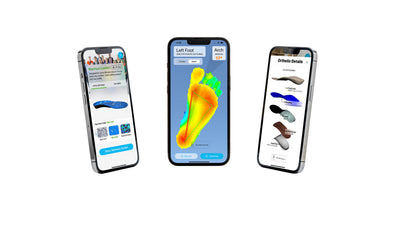
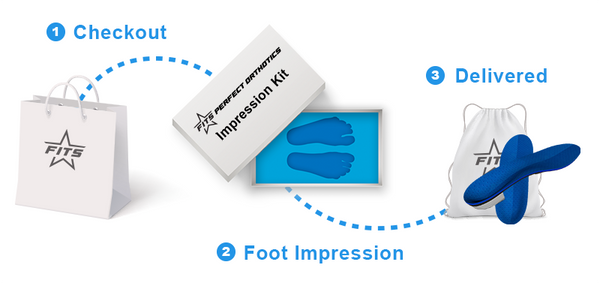
To order, scan your feet with your iPhone in the Fits Perfect app, a fast, simple, and accurate 3D scan. If you don't have an iPhone, a mail-in foam impression box is available.
How to break in running orthotics
- Wear them for walking first. Start with an hour or two a day in your running shoes.
- Build up over a week or two until they feel comfortable for a full day.
- Start with short, easy runs, then gradually move to longer runs and speed sessions.
- Remove the shoe's stock insole so the orthotic sits flat.
- Pay attention to sharp pain or rubbing, which may mean the shoe or orthotic isn't fitting well.
Other habits that keep runners healthy
- Increase mileage gradually rather than in big jumps.
- Replace running shoes when the cushioning wears out.
- Include strength work for the feet, calves, and hips.
- Stretch tight calves regularly.
- Build in rest days.
When to see a professional
If you have sharp pain, swelling, or pain that worsens during runs or lasts for days, see a doctor, podiatrist, or sports physical therapist. Persistent pain in the shin or foot can sometimes be a stress fracture.
Conclusion
Custom-made orthotics can be a valuable tool for runners, providing support and cushioning that ease pain and improve comfort. They can help with common running problems like plantar fasciitis, shin splints, metatarsalgia, and heel pain, and support better alignment so you can keep training consistently.
Frequently asked questions
Should runners wear orthotics?
Not every runner needs them, but they can help runners with recurring pain, flat feet, high arches, or overpronation.
Can orthotics help shin splints?
They can, especially when overpronation is contributing to strain on the lower leg.
Do I need special shoes for orthotics?
Most running shoes with a removable insole work well with orthotics.
How long do running orthotics last?
It depends on your mileage, but custom orthotics are designed for daily use over a long period.


