




Power walking is a great way to stay in shape and maintain a healthy lifestyle. It's lower impact than running, but long walks still involve thousands of steps, and each one loads your feet. Many walkers deal with pain, misalignment, or discomfort that limits how far or how often they can walk. Custom-made orthotics can help. They're inserts worn inside your walking shoes to support and align your feet and legs, created from a 3D model of your feet, and often used for problems such as plantar fasciitis, flat feet, and overpronation.
This article covers common foot problems in walkers, the benefits of orthotics, and what to look for in the best walking orthotics.
Common foot problems in walkers
- Plantar fasciitis and heel pain: Repeated heel strikes and long distances can strain the plantar fascia.
- Arch pain: Especially in people with flat feet or high arches.
- Shin splints: Brisk walking, particularly when increasing pace or distance, can strain the shins.
- Metatarsalgia: Pain in the ball of the foot from pushing off.
- Blisters: From friction over long distances.
- Knee and hip discomfort: Sometimes linked to how the feet move.
The benefits of orthotics for walkers
- Pain relief: Orthotics redistribute pressure across the foot, easing pain from plantar fasciitis and heel spurs.
- Better posture and alignment: Supporting the arch and controlling overpronation can improve alignment through the ankles, knees, and hips.
- Comfort: Walking and standing become more comfortable, especially over long distances.
- A more efficient stride: Supported feet can help you maintain good walking form as you tire.
- Reduced strain: Better foot mechanics can reduce strain linked to common walking aches.
- Built for your feet: Custom orthotics match your foot shape, unlike over-the-counter insoles.
- Durability: High-quality materials hold their shape over many miles.
What to look for in the best walking orthotics
Designed for forward motion
Walking, like running, is a forward, repetitive movement. The best walking orthotics support a smooth heel-to-toe roll.
A balance of cushioning and support
Walkers need firm arch support plus cushioning for comfort over long distances.
Shock absorption
Helps reduce impact on the joints and muscles, especially on pavement.
Durable, breathable materials
For comfort during long walks and many miles of use.
Made from your foot shape
Support that lines up with your arch makes the biggest difference over long distances.
Our recommendation for walkers
For power walkers of all speeds, we recommend the Fits Perfect Running orthotic, designed for sneakers with forward-moving support. For casual walking in everyday shoes, Maximum Comfort is a great option.
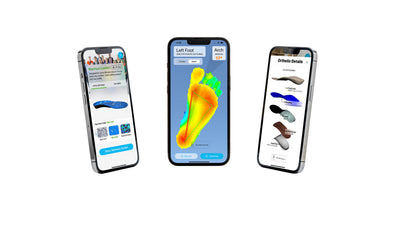
To order, scan your feet with your iPhone in the Fits Perfect app, a fast, simple, and accurate 3D scan. If you don't have an iPhone, a mail-in foam impression box is available.
Power walking form tips
- Stand tall: Keep your head up and shoulders relaxed.
- Bend your arms: Swing them at about 90 degrees, close to your body.
- Take quicker steps rather than longer strides to pick up the pace.
- Land on your heel and roll through to push off from your toes.
- Engage your core to support good posture.
Building up your walking safely
- Increase distance and pace gradually.
- Mix flat routes with gentle hills as you get fitter.
- Stretch your calves after walks.
- Replace walking shoes when the cushioning wears out.
- Wear moisture-wicking socks to reduce blisters.
Choosing walking shoes for orthotics
The right shoe makes your orthotics work better. Look for walking shoes or sneakers with a removable insole, so the orthotic can sit flat in its place. A firm heel counter, the stiff part around the back of the heel, helps keep your foot stable. Choose shoes with enough depth and toe room that the orthotic doesn't push your foot up against the top of the shoe. Try shoes on with your orthotics in place, ideally later in the day when your feet are slightly larger, and walk around before buying. If you walk several times a week, rotating between two pairs of shoes lets each pair dry out and last longer. For more on how support helps, see what are orthotics and how do they benefit you?
How to break in walking orthotics
- Remove the shoe's original insole and insert the orthotic.
- Wear them for short walks and daily activities first.
- Gradually increase walk length over one to two weeks.
- Watch for rubbing or pressure points.
For more on foot pain and orthotics, see do orthotic insoles help with heel pain?
When to see a professional
See a podiatrist or doctor if you have pain that worsens during walks, lasts for days, or comes with swelling or numbness.
Conclusion
Custom-made orthotics can be a great option for walkers and power walkers dealing with foot and leg pain, misalignment, or discomfort. The best walking orthotics are designed for forward motion, balance cushioning and support, absorb shock, and fit your own feet. With the right support, you can walk farther and more comfortably.
Frequently asked questions
What are the best insoles for walking?
Orthotics made from your foot shape, with arch support, cushioning, and shock absorption for forward motion.
Do walkers need orthotics?
Walkers with foot pain, flat feet, high arches, or overpronation often benefit.
Can orthotics help with walking long distances?
Yes. They reduce fatigue and spread pressure over long walks.
Can I use running orthotics for walking?
Yes. Running orthotics suit walking shoes and sneakers well.


