



Tennis requires quick movements, agility, and endurance. Players sprint, stop, change direction, and lunge for the ball over and over, often for hours at a time. Many tennis players deal with pain, misalignment, or discomfort that affects their game. Custom-made orthotics can help. They're inserts worn inside your tennis shoes to support and align your feet and legs, created from a 3D model of your feet.
This article covers the foot demands of tennis, common foot problems players face, how orthotics help, and what to look for in tennis orthotics.
Why tennis is hard on the feet
- Lateral movement: Side-to-side shuffles and recoveries put strain on the arches and ankles.
- Sudden stops: Braking forces push the foot forward in the shoe, loading the toes and forefoot.
- Lunges and split steps: Repeated explosive movements load the heels and calves.
- Hard courts: Hard surfaces absorb little impact.
- Long matches: Fatigue builds over hours of play.
Common foot problems in tennis players
- Plantar fasciitis and heel pain: From repeated pushing off and landing.
- Tennis toe: Bruising under the toenail from the toes hitting the front of the shoe during sudden stops.
- Ankle sprains: From lateral movement and quick direction changes.
- Achilles tendonitis: From repeated push-offs and lunges.
- Metatarsalgia: Pain in the ball of the foot from staying on your toes.
- Blisters: From the foot sliding inside the shoe.
The benefits of orthotics for tennis players
- Pain relief: Orthotics redistribute pressure across the foot, easing pain from plantar fasciitis, heel spurs, and forefoot overload.
- Better alignment: Supporting the arch and controlling excessive rolling can improve alignment through the ankles and knees.
- Comfort: Standing, moving, and playing become more comfortable during long matches.
- Stability: A secure, supported foot helps with control during lateral movement.
- Less sliding in the shoe: Better fit can reduce the forward slide that contributes to tennis toe and blisters.
- Reduced strain: Better foot mechanics can reduce strain from repeated movement.
- Durability: Built from high-quality materials designed to last.
What to look for in tennis orthotics
- Designed for court sports: Support for multi-directional movement, not just forward running.
- Balance of cushioning and support: Stability for lateral moves plus impact absorption.
- Shock absorption: Especially for hard-court players.
- Secure heel cup: Helps limit sliding during stops.
- Durable, breathable materials: For comfort during long matches.
- Made from your foot shape: Support that matches your arch.
Our recommendation for tennis players
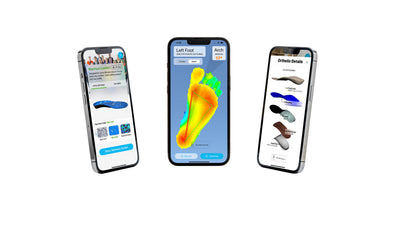
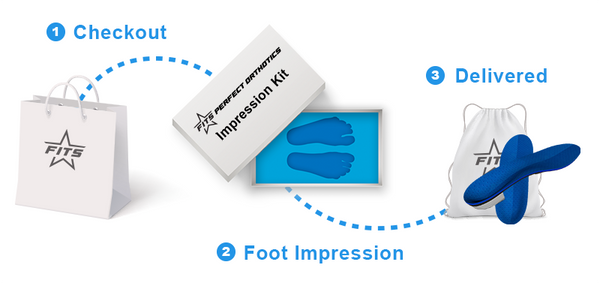
For tennis players of all levels, we recommend the Fits Perfect Court orthotic, designed for tennis, basketball, volleyball, and racquet sports. To order, scan your feet with your iPhone in the Fits Perfect app, a fast, simple, and accurate 3D scan. If you don't have an iPhone, a mail-in foam impression box is available.
Clay, grass, and hard courts
Different surfaces place different demands on your feet. Hard courts offer the least give, so cushioning and shock absorption matter most. Clay courts involve more sliding, so stability and a secure heel are important. Grass is lower and faster, with quick, short movements. Whatever surface you play on, a supportive orthotic made from your own foot shape helps your feet handle the movement.
Custom vs. store-bought tennis insoles
Many store-bought insoles focus on cushioning but are shaped for an average foot and offer little lateral stability. In tennis, where your foot is constantly pushing sideways and braking, a generic shape can let the foot shift and slide. Custom orthotics follow the contours of your own feet, so the arch support and heel cup hold your foot more securely during side-to-side movement. They also hold their shape longer under heavy use. For more on how support helps across sports, see which athletes can benefit from wearing orthotics.
How to break in tennis orthotics
- Remove the tennis shoe's original insole and insert the orthotic.
- Wear them for everyday activities for a few days.
- Hit for short sessions before playing full matches.
- Build up over one to two weeks.
- Check for rubbing, especially at the heel and toes.
Other tips for tennis players
- Wear tennis-specific shoes with good lateral support.
- Make sure shoes have enough length to avoid tennis toe.
- Lace shoes snugly to reduce sliding.
- Replace shoes when the tread and support wear down.
- Strengthen ankles and calves with balance and calf exercises.
For more on court sports, see how basketball players benefit from orthotics.
When to see a professional
See a sports physician or podiatrist if you have an ankle injury, persistent heel or forefoot pain, swelling, or a painful, discolored toenail that doesn't improve.
Conclusion
Custom-made orthotics can be a great option for tennis players dealing with foot and leg pain, misalignment, or discomfort. They provide pain relief, better alignment and stability, and comfort for long matches. A court-specific orthotic made from your own feet gives you the best support for tennis.
Frequently asked questions
What are the best insoles for tennis?
Court-specific orthotics made from your foot shape, with lateral stability, cushioning, and a secure heel.
Can orthotics help tennis toe?
A better fit and secure heel can reduce sliding, which may help. Proper shoe length is also important.
Do tennis players need different orthotics than runners?
Yes. Tennis requires lateral support, while running orthotics focus on forward motion.
Can orthotics help with heel pain from tennis?
Yes. They support the arch and cushion the heel.


