



Skiing and snowboarding demand balance, control, and strength, all transmitted through your feet. Your boots are the link between your body and your skis or board, so how your feet sit inside them affects every turn. Many skiers and snowboarders deal with foot pain, cold feet, cramping, and discomfort that cut their days short. Custom-made orthotics can help. They're inserts worn inside your boots to support and align your feet, created from a 3D model of your feet.
This article covers why boots are hard on your feet, common problems on the slopes, how orthotics help, and what to look for in ski and snowboard orthotics.
Why ski and snowboard boots are hard on the feet
Ski boots in particular are rigid shells designed to transfer small movements of your feet and legs directly to the skis. Snowboard boots are softer but still close-fitting. Stock boot insoles are usually thin and flat, so your arch is left unsupported. When the arch isn't supported, the foot can flatten and shift inside the boot, which reduces control and creates pressure points. To compensate, many people over-tighten their buckles or laces, which can restrict circulation and lead to cold, numb feet.
Common foot problems on the slopes
- Arch pain and cramping from an unsupported foot inside the boot.
- Cold or numb feet, often from over-tightened boots.
- Pressure points on the ankles, shins, and toes.
- Heel lift, where the heel rises inside the boot, reducing control.
- Knee strain, sometimes linked to how the foot sits in the boot.
- Fatigue from the feet working hard all day.
The benefits of orthotics for skiers and snowboarders
An orthotic supports your arch and gives your foot a stable, even platform inside the boot. With the foot held in a more balanced position, small movements transfer more directly to your skis or board, which can improve edge control and responsiveness. A better-supported foot also fills the boot more evenly, reducing the movement that causes pressure points and heel lift.
Because the foot is held more securely, many people find they don't need to crank their buckles or laces as tight, which can help with circulation and warmth. Supporting the foot and controlling excessive rolling can also improve alignment through the knees, an important consideration in a sport that puts heavy demands on them. And with less work for the small muscles of the feet, you may feel less fatigue and cramping by the end of the day.
What to look for in ski and snowboard orthotics
- Thin profile: Boots are close-fitting, so a slim orthotic keeps the fit right.
- Firm, stable support: Support that doesn't compress under load.
- Made from your foot shape: Support that matches your arch.
- Heel stability: Helps keep the heel seated in the boot.
- Durability: To handle cold, moisture, and many days on the mountain.
Our recommendation for skiers and snowboarders
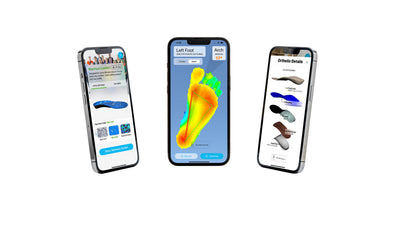
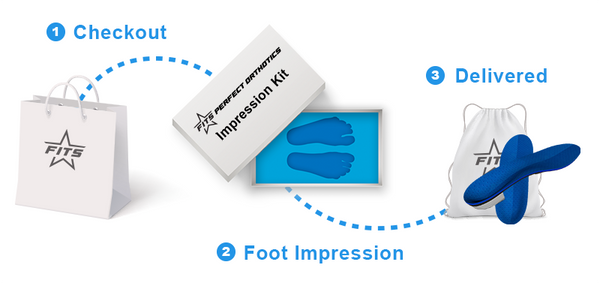
We recommend the Fits Perfect UltraThin Carbon Sport orthotic, designed for ski boots, ice skates, cleats, and cycling shoes. It gives support without taking up much room in the boot. To order, scan your feet with your iPhone in the Fits Perfect app, a fast, simple, and accurate 3D scan. If you don't have an iPhone, a mail-in foam impression box is available.
Fitting orthotics in your boots
Remove the boot liner's stock insole and replace it with the orthotic. Put the boot on with the socks you ski or ride in, and check that your heel sits snugly at the back and your toes aren't jammed. Wear the boots around the house before your first day out, then take a few easy runs before tackling more demanding terrain. If you have persistent pressure points, a boot fitter can adjust the shell or liner.
Other tips for comfortable feet on the slopes
- Get boots professionally fitted for length, width, and volume.
- Wear one pair of thin, moisture-wicking ski socks rather than thick or multiple socks.
- Avoid over-tightening buckles and laces.
- Dry boot liners fully between days.
- Loosen your boots during breaks to restore circulation.
For more on sports orthotics, see which athletes can benefit from wearing orthotics.
When to see a professional
See a doctor if you have numbness that doesn't go away after you take your boots off, persistent pain, or a knee or ankle injury.
Conclusion
Custom-made orthotics can be a great option for skiers and snowboarders dealing with foot pain, cramping, cold feet, or poor boot fit. They support the arch, stabilize the foot inside the boot, and can improve control and comfort. A thin, durable orthotic made from your own feet gives you support without compromising the fit of your boots.
Frequently asked questions
Can you put orthotics in ski boots?
Yes. Thin orthotics replace the stock insole inside the boot liner.
Do orthotics help with cold feet when skiing?
A better-supported foot may let you avoid over-tightening boots, which can help circulation.
Are orthotics good for snowboarding?
Yes. They support the arch and improve stability inside snowboard boots.
Will orthotics change my boot fit?
A thin orthotic usually improves fit by supporting the arch and filling space under the foot.


