




Dress shoes are rarely designed with comfort in mind. Many have thin, flat insoles, little arch support, and a narrow fit. If you wear them all day for work, or need them for events, your feet can pay the price. Unfortunately, the orthotics that work well in sneakers usually won't fit in a slim dress shoe. The good news is that slim, low-profile orthotics are designed for exactly this situation.
This guide explains why regular orthotics don't fit dress shoes, how thin orthotics work, which dress shoe styles accommodate them best, and tips for getting a comfortable fit.
Why regular orthotics don't fit dress shoes
Sneakers, running shoes, and work boots have plenty of internal volume and a removable insole, leaving room for a full-length orthotic. Dress shoes are different:
- Less depth: There's little space between your foot and the top of the shoe.
- Narrower shape: Especially toward the toe.
- Fixed insoles: Many dress shoes have glued-in insoles that can't be removed.
- Close-fitting heels: A thick orthotic can lift your heel right out of the shoe.
Put a full-length sport orthotic in a dress shoe and it may cramp your toes, lift your heel out of the back, or simply not fit.
How thin 3/4-length orthotics work
Orthotics designed for dress shoes solve this with two features:
- A slim profile: Thin, supportive materials provide arch support without taking up much room.
- 3/4 length: The orthotic ends just behind the ball of the foot, so it doesn't crowd the toe area where dress shoes are narrowest.
The most important support, under the heel and arch, is still there. Because custom orthotics are made from the shape of your own feet, that support lines up with your arch even in a slim design.
Which dress shoes work best with orthotics?
Good options
- Oxfords and derbies: Lace-up styles let you adjust the fit to make room for an orthotic.
- Loafers with some depth: Look for a heel that holds your foot securely.
- Dress boots: Chelsea and lace-up dress boots often have more room.
- Low block heels and dressy flats with a supportive heel: These can work for many people.
More challenging
- Very shallow flats and ballet flats, which have almost no depth.
- High heels, where the steep angle leaves little room and changes how weight is carried.
- Very pointed shoes, which squeeze the forefoot.
- Slip-ons with a loose heel, which may slip off once an orthotic is added.
Tips for a comfortable fit
- Remove the insole if you can. If your dress shoe has a removable insole, take it out before adding the orthotic.
- Try shoes on with your orthotics. When buying new dress shoes, bring your orthotics and test them in-store.
- Consider half a size up or a wider fit if shoes feel tight with an orthotic.
- Use the laces. Loosen the top eyelets slightly for room, while keeping the heel secure.
- Break them in gradually. Wear them for a few hours at a time at first.
Dress shoes for different workplaces
The right approach depends on how you spend your day. If you're on your feet a lot in dress shoes, such as in sales, hospitality, law, or events, support matters more than ever, and a lace-up shoe with a bit more depth will give you the most room for an orthotic. If you mainly sit at a desk and wear dress shoes for meetings, a slim orthotic in a classic oxford or loafer is usually enough. For formal events where you'll stand for hours, choose the most supportive dress shoe you're comfortable wearing, and break your orthotics in well before the day.
Why dress shoe support matters
If you wear dress shoes for long workdays, unsupportive footwear can contribute to arch pain, heel pain, pain in the ball of the foot, and general foot fatigue. High heels and narrow toes can also put extra pressure on the forefoot, which is linked to problems like metatarsalgia and bunions. Adding support to the shoes you wear most can make a real difference to how your feet feel at the end of the day.
The Fits Perfect Dress Shoe orthotic
The Fits Perfect Dress Shoe orthotic is designed for dress and fashion shoes. It's thin and 3/4 length to fit easily into tighter footwear while still supporting your arch and heel. Like every Fits Perfect style, it's $249 with free shipping.
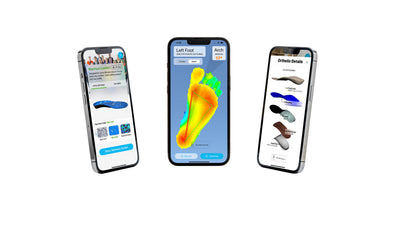
To order, scan your feet with your iPhone in the Fits Perfect app, a fast, simple, and accurate 3D scan. If you don't have an iPhone, a mail-in foam impression box is available. Scan intake and manufacturing take 1-2 business days, followed by 5-7 days of shipping.
If you switch between dress shoes and casual shoes, many people keep a second pair in their everyday shoes, such as Maximum Comfort for sneakers. Browse the dress orthotics collection.
Other ways to make dress shoes more comfortable
- Rotate your shoes so each pair can dry and recover.
- Keep a comfortable pair for your commute and change at work.
- Stretch your calves if you wear heels regularly.
- Have shoes professionally stretched if they pinch in specific spots.
For more on comfort across all your shoes, see make your shoes more comfortable with custom orthotic insoles.
Frequently asked questions
Can you wear orthotics in dress shoes?
Yes, with a slim, 3/4-length orthotic designed for dress shoes.
Do orthotics work in high heels?
It's difficult in very high heels because of the steep angle and limited room. Lower heels and dressy flats with some depth work better.
Will orthotics make my dress shoes tight?
Slim orthotics are designed to minimize this. Removing the original insole, adjusting the laces, or going up half a size can help.
What dress shoes are best for orthotics?
Lace-up oxfords and derbies, deeper loafers, and dress boots usually work best.


